
If you’ve seen a paraglider floating silently above the coast of Gran Canaria and wondered, “Could I do that?”, the short answer is yes—without any prior training. A tandem paragliding flight is the simplest way to experience paragliding for the first time: you fly with a certified instructor, under one wing, sharing the same harness system, with the pilot in full control of the flight.
What Is a Tandem Paragliding Flight?
Tandem paragliding in one simple definition
A tandem paragliding flight is a paragliding experience where two people fly together using a purpose-built tandem wing:
- The instructor (pilot) flies from the back position and handles takeoff, route, speed management, and landing.
- You (the passenger) fly from the front position and follow simple instructions (mainly for takeoff and landing).
The goal is to let you experience real free flight—smooth, quiet, and panoramic—while the technical side stays in professional hands.
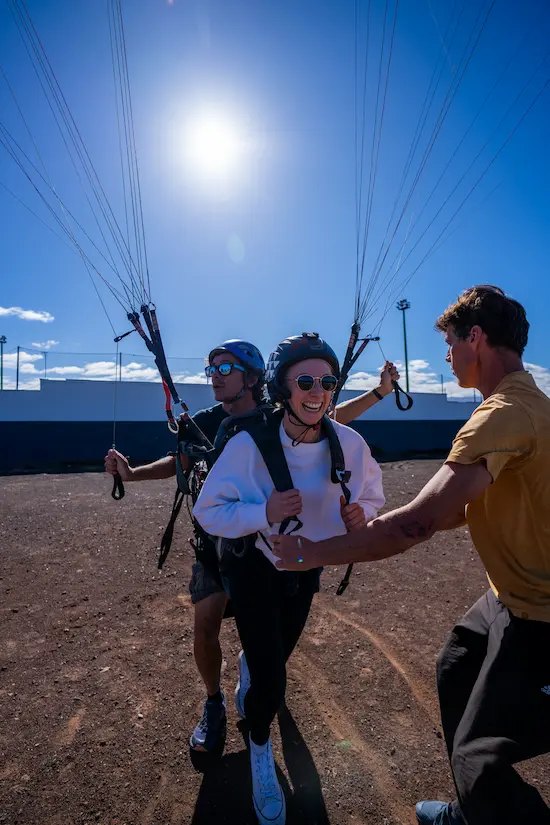
Who does what: passenger vs. instructor
In a tandem flight, responsibilities are clear and intentionally simple:
The instructor typically manages:
- Weather assessment and “go / no-go” decision
- Equipment checks and setup
- Flight plan (where you fly, altitude, and duration depending on conditions)
- Active piloting: steering, speed control, and approach to landing
You typically do:
- A short briefing (what to do with your body, when to run, how to stand for landing)
- A few seconds of coordinated running on takeoff (guided and coached)
- Relax and enjoy the flight once airborne
This structure is exactly why tandem is the standard entry point for first-timers: you get the authentic sensation of paragliding, but with minimal cognitive load.
If you’re reading this while researching flights around Las Palmas / Gran Canaria, keep in mind that the experience can vary slightly with the takeoff site and conditions (coastal vs. inland airflow). We’ll cover those location-specific views in their own posts so this guide stays focused on the core concept.
How a Tandem Flight Works (Step by Step)
Pre-flight briefing: what you’ll learn in 2 minutes
Before takeoff, your instructor explains only what matters: how to position your body, when to run, and what to do during landing. It’s short and practical—no technical overload.
Takeoff: the only thing you must do
Takeoff is usually the most “active” moment for the passenger. Your main job is to run continuously for a few seconds when the instructor tells you to, without sitting too early. The pilot manages the wing, direction, and the exact timing.
In the air: what happens once you’re flying
Once airborne, your role becomes simple: relax and enjoy. The instructor flies the route and adjusts altitude and direction depending on the conditions. If the day allows, the flight can feel smoother and calmer, or slightly more dynamic—always appropriate for a first-time experience.
Landing: simple, guided, and controlled
Landing is also fully guided. Near the end, the instructor tells you exactly what to do—typically stand up and take a few steps. The approach and final flare are handled by the pilot.
What to Expect During the Experience
How it feels (calm vs adrenaline)
Most first-time tandem flights feel surprisingly calm and smooth once you’re airborne. The “adrenaline moment” is usually takeoff—then it quickly turns into a quiet, panoramic glide with a strong sense of freedom.
Common first-timer concerns (and what’s normal)
- “Will I feel dizzy?” Usually no—most people feel stable, not like a rollercoaster.
- “Is it scary?” The anticipation is often bigger than the flight itself.
- “Do I need to do anything in the air?” No—your instructor handles the flying; you mainly relax and look around.
- “What about height?” Many people who dislike heights still enjoy it because you’re not standing on an edge—you’re moving smoothly in open air.
What to Wear and What to Bring
Clothing and shoes
Wear comfortable clothes you can move in and closed-toe shoes with a good grip (sports shoes are ideal). A light jacket is recommended—air temperature can feel cooler once you’re flying, even on warm days.
Phones/cameras: when it’s a good idea (and when not)
If you bring a phone, keep it secure and only use it when the instructor says it’s appropriate. In general, it’s better to focus on the experience and let your instructor handle photos/video if that’s part of your flight option.
How Long Does a Tandem Flight Usually Last?
Tandem flights can vary depending on the day’s conditions and the takeoff site, so there isn’t one fixed duration for every flight. If you want exact ranges and what affects them.
Where Do Tandem Flights Happen Around Las Palmas / Gran Canaria?
Tandem flights can take place from different launch areas in Gran Canaria depending on wind and conditions. In general, you’ll find two “styles” of scenery:
Coastal flights vs inland flights (conceptual)
- Coastal flights often deliver ocean views and a strong “open horizon” feeling.
- Inland flights can offer more mountain relief, valleys, and different air dynamics.
Is Tandem Paragliding Safe?
A tandem flight is designed to be a professionally managed first-flight experience: the instructor makes the decisions, performs checks, and controls the wing throughout.
Frequently Asked Questions About Tandem Flights
What’s the difference between a tandem flight and a paragliding course?
A tandem flight is an experience where you fly with an instructor piloting. A course is training to learn how to fly independently over time.
Can kids fly tandem?
It depends on practical factors (size, conditions, and operator policy). For a clear checklist, use:
- Requirements for Tandem Flying (internal link)
Do I need previous experience?
No. Tandem is built for first-timers.
What if I’m afraid of heights?
Many people still enjoy tandem flying because it feels more like gliding than “being on a high edge.” The instructor also keeps everything calm and guided.